

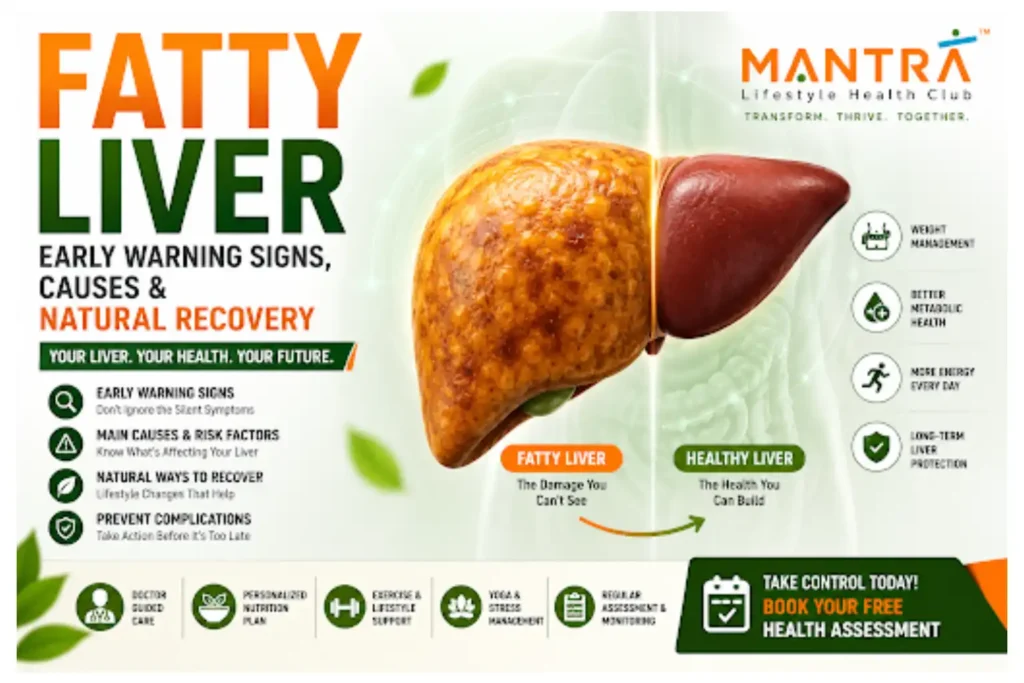
Fatty liver disease has become one of the fastest-growing lifestyle-related health conditions worldwide. Many people don’t realize they have it because it often develops silently, with few or no symptoms in its early stages.
If left unmanaged, fatty liver can progress and affect overall liver function. The encouraging news is that, particularly in its early stages, healthy lifestyle changes can play an important role in improving liver health.
In this guide, we’ll explain what fatty liver is, why it develops, the symptoms to watch for, and practical steps that may help support recovery.
What Is Fatty Liver Disease?
Fatty liver disease occurs when excess fat accumulates in the liver.
A healthy liver contains only a small amount of fat. When fat makes up more than about 5–10% of the liver’s weight, it is considered fatty liver disease.
There are two main types:
Non-Alcoholic Fatty Liver Disease (NAFLD)
This is the most common type and is associated with:
- Obesity
- Type 2 Diabetes
- Insulin Resistance
- High Cholesterol
- Sedentary Lifestyle
Alcohol-Related Fatty Liver Disease
This type develops due to excessive alcohol consumption.
Most lifestyle-related fatty liver cases are classified as Non-Alcoholic Fatty Liver Disease (NAFLD).
Early Warning Signs of Fatty Liver
One of the biggest challenges is that many people experience no symptoms in the early stages.
As the condition progresses, some people may notice:
- Persistent fatigue
- Low energy
- Mild discomfort in the upper right abdomen
- Feeling unusually full after meals
- Difficulty losing weight
- Brain fog
- Increased waist circumference
Many people discover fatty liver only after routine blood tests or an abdominal ultrasound.
What Causes Fatty Liver?
Fatty liver usually develops due to multiple lifestyle and metabolic factors rather than a single cause.
Common risk factors include:
- Obesity
- Belly fat
- Insulin resistance
- Type 2 Diabetes
- High triglycerides
- High cholesterol
- Poor diet
- Lack of physical activity
- Poor sleep
- Chronic stress
- PCOS
- Metabolic syndrome
These conditions often occur together, making lifestyle management essential.
Who Is at Higher Risk?
You may be at increased risk if you:
- Are overweight or obese
- Have diabetes or prediabetes
- Have high cholesterol
- Have high blood pressure
- Have PCOS
- Lead a sedentary lifestyle
- Eat large amounts of processed foods
- Rarely exercise
- Have a family history of metabolic disorders
Why Fatty Liver Should Not Be Ignored
Although fatty liver often starts silently, ignoring it can allow the condition to progress.
In some individuals, untreated fatty liver may lead to:
- Liver inflammation
- Liver scarring (fibrosis)
- Non-Alcoholic Steatohepatitis (NASH)
- Reduced liver function
- Increased risk of cardiovascular disease
Early diagnosis and lifestyle changes can help reduce these risks.
Can Fatty Liver Be Reversed Naturally?
In many early-stage cases, improving daily habits can significantly support liver health.
The goal isn’t simply to lose weight quickly.
The focus should be on improving overall metabolic health.
Lifestyle Changes That Support Liver Health
1. Maintain a Healthy Weight
Even modest weight loss may improve liver fat in many individuals.
Avoid crash diets, as rapid weight loss can sometimes worsen liver health.
2. Eat a Balanced Diet
Choose foods such as:
- Fresh vegetables
- Fruits
- Whole grains
- Lean proteins
- Healthy fats
- Nuts
- Seeds
Limit:
- Sugary drinks
- Refined carbohydrates
- Processed foods
- Deep-fried foods
- Excess sweets
3. Exercise Regularly
Aim for at least 150 minutes of moderate physical activity each week.
Activities may include:
- Brisk walking
- Cycling
- Swimming
- Strength training
- Yoga
Regular movement helps improve insulin sensitivity and metabolic health.
4. Improve Sleep Quality
Poor sleep is linked with obesity, insulin resistance, and fatty liver.
Aim for 7–9 hours of quality sleep each night.
5. Manage Stress
Chronic stress can negatively affect metabolism and healthy lifestyle habits.
Stress-management techniques include:
- Yoga
- Meditation
- Deep breathing
- Mindfulness
- Regular physical activity
Foods That Support Liver Health
Include more:
- Leafy green vegetables
- Berries
- Oats
- Lentils
- Fish rich in Omega-3
- Olive oil
- Green tea
- Garlic
- Coffee (in moderation, if suitable for you)
A balanced dietary pattern is more important than any single “superfood.”
Common Myths About Fatty Liver
Myth 1
Only overweight people develop fatty liver.
Fact: Even people with a normal body weight can develop fatty liver if they have poor metabolic health.
Myth 2
Fatty liver always causes pain.
Fact: Many people experience no symptoms at all.
Myth 3
Liver detox drinks can cure fatty liver.
Fact: No detox drink can replace healthy lifestyle habits and medical guidance.
Myth 4
If liver tests improve, treatment is no longer needed.
Fact: Long-term healthy habits remain important to help maintain liver health.
When Should You Consult a Healthcare Professional?
You should seek medical advice if you:
- Have persistent fatigue
- Have obesity
- Have diabetes
- Have high cholesterol
- Have abnormal liver function tests
- Experience abdominal discomfort
- Have been diagnosed with fatty liver
Early evaluation allows healthcare professionals to recommend the most appropriate management plan.
How Mantra Lifestyle Health Club Supports Better Liver Health
At Mantra Lifestyle Health Club, we believe that fatty liver management requires more than simply focusing on weight.
Our doctor-guided lifestyle approach focuses on improving overall metabolic health through personalized care.
Depending on individual needs, the approach may include:
- Comprehensive health assessment
- Body composition analysis
- Lifestyle evaluation
- Personalized nutrition guidance
- Exercise planning
- Yoga and stress management
- Progress monitoring
The objective is to build healthier habits that support long-term liver and metabolic health.
Frequently Asked Questions
Can fatty liver be cured?
Early-stage fatty liver often improves with healthy lifestyle changes. Management depends on the individual’s overall health and should be guided by a healthcare professional.
What are the first signs of fatty liver?
Many people experience no symptoms. Some may notice fatigue, low energy, abdominal discomfort, or difficulty losing weight.
Which foods should I avoid?
Try to limit sugary beverages, processed foods, refined carbohydrates, deep-fried foods, and excess sweets.
Can exercise help fatty liver?
Regular physical activity supports metabolic health and may help reduce liver fat when combined with healthy eating habits.
Is fatty liver dangerous?
If left unmanaged, fatty liver can progress in some individuals. Early diagnosis and healthy lifestyle changes are important.
How is fatty liver diagnosed?
Doctors may recommend blood tests, ultrasound imaging, and other evaluations depending on your symptoms and medical history.
Fatty liver disease is increasingly common, but it doesn’t have to define your future.
Understanding the early warning signs and making consistent lifestyle improvements can have a meaningful impact on your liver and overall health.
Rather than relying on quick fixes, focus on sustainable habits that support better metabolic health over time.
Ready to Take the First Step?
If you’re concerned about fatty liver, obesity, diabetes, or other lifestyle-related health conditions, consider booking a FREE Health & Metabolic Assessment at Mantra Lifestyle Health Club.
Our experts can help you understand your current health status and guide you toward a personalized lifestyle improvement plan designed for long-term wellness.
