

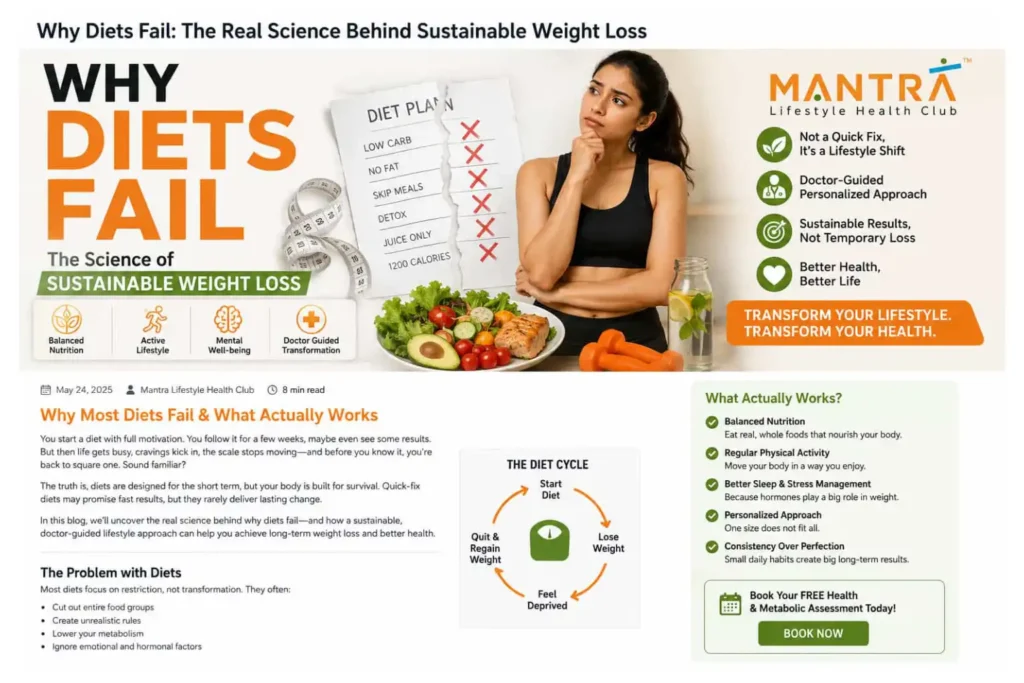
Every year, millions of people start a new diet hoping it will finally help them lose weight. For a few weeks, everything seems to work. The number on the scale drops, motivation is high, and confidence returns.
Then reality sets in.
Cravings increase.
Energy levels fall.
Life gets busy.
Old eating habits slowly return.
Within a few months, the lost weight often comes back—and sometimes even more than before.
If this sounds familiar, you’re not alone.
The problem isn’t your willpower.
The problem is that most diets are designed for short-term weight loss, not long-term health transformation.
Why Most Diets Fail
Traditional diets usually focus on one thing:
Eating less.
While creating a calorie deficit can help with temporary weight loss, it rarely addresses the underlying reasons people gain weight in the first place.
Weight management depends on several interconnected factors, including:
- Metabolism
- Hormonal balance
- Sleep quality
- Stress levels
- Physical activity
- Nutrition quality
- Mental well-being
- Lifestyle habits
Ignoring these factors often leads to disappointing long-term results.
The Biggest Problems with Restrictive Diets
1. They Slow Down Your Metabolism
When calorie intake becomes extremely low, your body enters survival mode.
Instead of burning fat efficiently, your metabolism slows down to conserve energy.
This means you burn fewer calories throughout the day, making future weight loss even harder.
2. Muscle Loss Instead of Fat Loss
Crash diets often lead to muscle loss along with fat loss.
Muscle plays an important role in maintaining a healthy metabolism.
Losing muscle means your body burns fewer calories even while resting.
The result?
Weight regain becomes much more likely.
3. Diets Ignore Hormonal Health
Hormones significantly influence:
- Hunger
- Fullness
- Fat storage
- Blood sugar
- Energy levels
Conditions such as:
- Insulin Resistance
- PCOS
- Thyroid Disorders
- Chronic Stress
can make weight loss difficult regardless of calorie intake.
Without addressing these issues, dieting alone rarely produces lasting success.
4. Restrictive Diets Are Difficult to Maintain
Many popular diets eliminate:
- Rice
- Bread
- Fruits
- Healthy fats
- Entire food groups
While this may produce short-term weight loss, few people can maintain these restrictions for years.
Once normal eating resumes, weight often returns.
The Weight Loss Cycle
Many people unknowingly repeat the same cycle:
- Start a diet
- Lose weight
- Feel deprived
- Stop dieting
- Regain weight
- Start another diet
This cycle can continue for years without solving the real problem.
The Science Behind Sustainable Weight Loss
Research consistently shows that long-term success comes from improving overall lifestyle rather than following temporary diets.
Sustainable weight management focuses on creating healthy habits that become part of everyday life.
Instead of asking,
“How quickly can I lose weight?”
The better question is:
“How can I improve my health for the rest of my life?”
What Actually Works?
Balanced Nutrition
Rather than eliminating foods completely, focus on:
- Whole grains
- Lean protein
- Healthy fats
- Fruits
- Vegetables
- Fiber-rich foods
Balanced nutrition provides energy while supporting metabolic health.
Regular Physical Activity
Exercise should never be viewed as punishment.
Find activities you genuinely enjoy:
- Walking
- Strength training
- Yoga
- Cycling
- Swimming
Consistency matters far more than intensity.
Quality Sleep
Poor sleep affects hormones responsible for hunger and cravings.
Adults should aim for approximately 7–9 hours of quality sleep each night.
Better sleep supports:
- Appetite regulation
- Blood sugar control
- Recovery
- Energy levels
Stress Management
Chronic stress increases cortisol levels, which may contribute to:
- Belly fat
- Emotional eating
- Poor sleep
- Fatigue
Managing stress through:
- Meditation
- Yoga
- Breathing exercises
- Mindfulness
can support healthier lifestyle habits.
Medical Assessment
Sometimes weight gain is linked to underlying medical conditions such as:
- Fatty Liver
- Prediabetes
- Diabetes
- Thyroid Disorders
- Hormonal Imbalances
- Metabolic Syndrome
A comprehensive health assessment helps identify these issues before creating a personalized plan.
Lifestyle Modification Is Different from Dieting
A structured lifestyle modification approach doesn’t simply focus on losing kilograms.
It focuses on improving your entire health profile.
That includes:
- Better body composition
- Improved metabolism
- Better blood sugar control
- Healthier cholesterol levels
- Increased energy
- Better sleep
- Improved fitness
- Long-term weight management
This creates sustainable results rather than temporary success.
Signs You Need More Than Just Another Diet
You may benefit from professional guidance if you:
- Lose weight but regain it repeatedly
- Have stubborn belly fat
- Feel tired despite dieting
- Have diabetes or prediabetes
- Have fatty liver
- Have thyroid issues
- Experience poor sleep
- Struggle with emotional eating
These may indicate that lifestyle modification—not another diet—is the better solution.
Why Choose Mantra Lifestyle Health Club?
At Mantra Lifestyle Health Club, we believe that lasting transformation requires more than calorie counting.
Our doctor-guided approach focuses on improving overall health through personalized lifestyle modification.
Depending on individual needs, the process may include:
- Comprehensive health assessment
- Body composition analysis
- Metabolic evaluation
- Personalized nutrition guidance
- Exercise planning
- Yoga and stress management
- Lifestyle coaching
- Progress tracking
Our goal isn’t simply helping people lose weight.
It’s helping them build healthier, more sustainable lives.
